Why the World is Safer After Khamenei's Elimination
Ali Khamenei’s death on Feb 28, 2026, in a US-IDF strike ends 37 years of dictatorship, terror funding, nuclear pursuit, and proxy wars. The world is safer: less repression, diminished threats, brighter future for Iran. (187 chars)
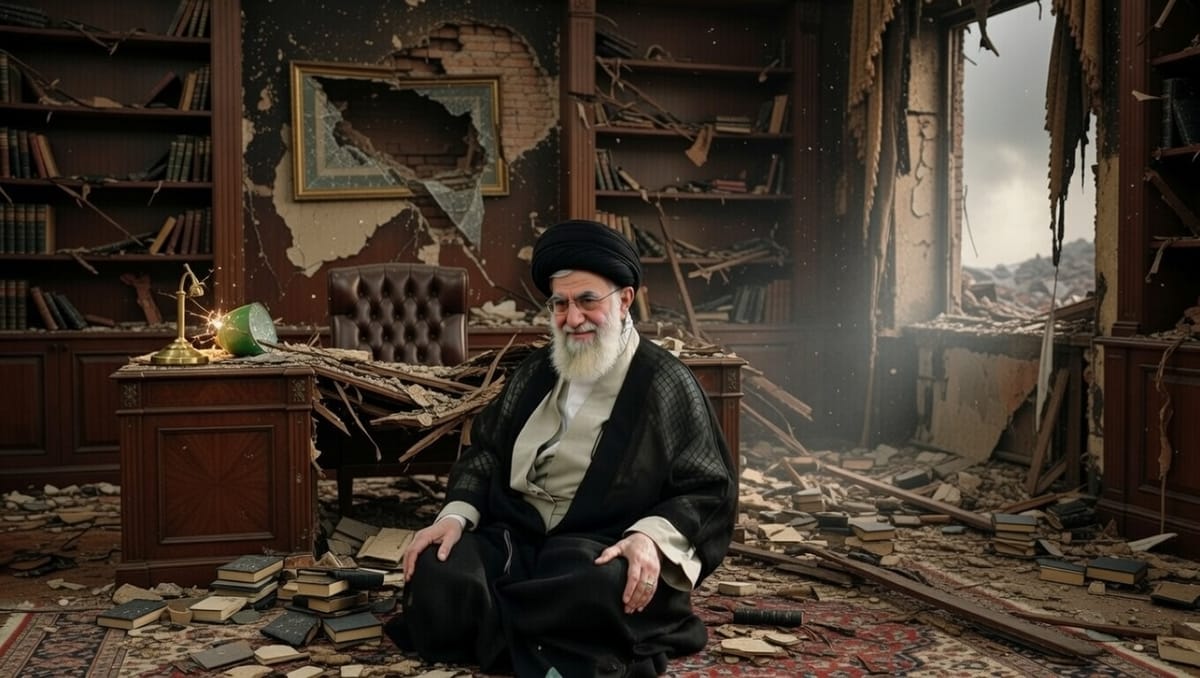
On February 28, 2026, Ali Khamenei, Iran's Supreme Leader since 1989, was killed in a joint US-IDF airstrike. His 37-year dictatorship fueled internal massacres and global threats. His removal disrupts Iran's terror network, nuclear ambitions, and proxy wars, enhancing worldwide security.
Khamenei's Dictatorship: A Legacy of Repression and Death
Khamenei ruled as an absolute dictator, suppressing dissent through brutal crackdowns. He ordered security forces to crush protests, resulting in thousands of deaths. Estimates suggest his regime caused up to millions of Iranian deaths directly and indirectly via executions, wars, and economic ruin—though verified figures from protests alone exceed 40,000.
- 1999 Student Movement: Khamenei authorized violent suppression of pro-democracy protests, killing dozens and injuring hundreds.
- 2009 Green Movement: After disputed elections, his forces killed at least 72, tortured thousands, and imprisoned opposition leaders.
- 2017-2018 Protests: Economic unrest met with lethal force; over 25 killed, thousands arrested.
- 2019 Fuel Protests: Khamenei's internet blackout hid a massacre; 1,500+ killed in days.
- 2022 Mahsa Amini Movement: Woman, Life, Freedom uprising saw 551+ protesters, including 68 minors, killed by regime forces.
- 2025-2026 Lion and Sun Revolution: Culminating in January 2026 massacres, over 36,500 killed in two days alone, per IRGC reports. Khamenei ordered "crush by any means," making it history's deadliest protest crackdown.
His regime executed thousands annually for political reasons, enforced gender apartheid, and caused economic despair leading to suicides and poverty deaths. As an Iranian who lived under him for 29 years, you witnessed this terror firsthand.
Reduced Terrorism Support
Khamenei orchestrated Iran's role as the world's leading state sponsor of terrorism, directing the IRGC-Qods Force to fund and arm proxy groups like Hezbollah, Hamas, Palestinian Islamic Jihad, Houthis, and Iraqi militias with billions annually. He enabled attacks including the 1996 Khobar Towers bombing (19 US deaths), support for Iraqi insurgents killing hundreds of US troops, and indirect ties to 9/11 elements. Khamenei prioritized terror funding over domestic needs, like COVID-19 aid for health workers.
His "Axis of Resistance" projected power through proxies, fueling conflicts in Yemen, Syria, Lebanon, and Gaza, causing thousands of deaths and global disruptions like Houthi Red Sea attacks. Post-October 7, 2023, Israel dismantled much of this network, killing leaders like Hassan Nasrallah (Hezbollah) and Yahya Sinwar (Hamas), weakening Iran's influence.
Khamenei's death creates a power vacuum, fragmenting IRGC coordination and proxy command chains. Proxies like Hezbollah and Houthis have condemned the strike but launched no immediate retaliations, signaling reduced operational capacity. With Iran's air defenses destroyed and nuclear/missile sites hit, funding and arms to terrorists diminish, curbing global threats.
Diminished Nuclear Threat
Iran's uranium enrichment is financially unreasonable, as domestic production is inefficient and reliant on imports. Reserves are insufficient for civilian needs; production costs $130-1,750/kg U3O8 vs. global $50-60/kg. Enrichment per SWU costs $200-300 vs. $40 elsewhere. Iran imports yellowcake (e.g., Niger deal for 300 tons). Total costs: $100B+ direct, up to $2T with sanctions.
This inefficiency signals weapons intent, not civilian power—cheaper to import fuel (23 countries do so). 60% enrichment lacks civilian use, stockpile suffices for 5-9 bombs.
Khamenei's death ends threat: He drove ideological pursuit despite costs. Vacuum fragments IRGC oversight, strikes destroyed facilities, halting program and averting breakout.
Weakened Proxy Wars and Regional Instability
Khamenei engineered Iran's "Axis of Resistance" through proxies like Hezbollah (Lebanon), Houthis (Yemen), and militias in Iraq/Syria, fueling conflicts to project power and destabilize rivals. This network caused mass casualties, disrupted global trade, and escalated tensions, with Khamenei prioritizing ideological dominance over Iranian welfare.
Syrian Civil War
Since 2011, Khamenei committed Iran to propping up Assad, fearing loss of a key ally for arms to Hezbollah and anti-Israel front. IRGC Quds Force, under his orders, provided billions ($30-50B), training, weapons, and troops, mobilizing Hezbollah and Shiite militias. This prolonged the war, killing hundreds of thousands, displacing millions, and enabling atrocities. Khamenei's intervention crushed opposition, but after Assad's 2024 fall, Iran lost its land corridor and influence.
October 7 Attack on Israel
Khamenei backed Hamas with $100M-$350M yearly, weapons, and training via IRGC. IRGC planned the 2023 assault, green-lit it in Beirut on Oct 2, enabling Hamas's raid killing 1,200, seizing hostages. This sparked Gaza war, regional escalation; Khamenei praised it as anti-US/Israel blow.
His 2026 death creates vacuum: IRGC fragments, funding cuts amid strikes on sites, proxies like Hezbollah/Hamas weakened (leaders killed). Ends coordinated attacks, stabilizes Middle East by dismantling Iran's proxy chaos.
Global Safety Enhanced
Khamenei's elimination on February 28, 2026, via US-IDF strikes degrades Iran's threats, averting escalation and fostering stability. It prevents further internal massacres (e.g., 2026 Lion and Sun Revolution's 36,500 deaths) and curbs global risks from his policies.
Reduced Escalation Risks
Strikes dismantled IRGC command, missile sites, and air defenses, weakening retaliation capacity and halting proxy coordination. Proxies like Hezbollah and Houthis, already diminished post-2023-2025 conflicts, face funding cuts, lowering attacks on global shipping and allies. This mirrors Soviet collapse effects: a weakened Iran intimidates neighbors less, stabilizing Middle East.
Nuclear and WMD Aversion
Program halt prevents breakout (5-9 bombs possible pre-strike), curbing arms race and potential strikes on Israel/US. "Iran cannot have a nuclear weapon" as global security imperative.
Potential Regime Shift Benefits
Power vacuum may harden IRGC initially, but risks collapse, enabling freer Iran. Prince Reza Pahlavi, exiled crown prince, positions himself as transitional leader via Iran Prosperity Project: lead coalition of internal forces and military for stable handover.
He urges defections from security forces, release of political prisoners, and immediate stabilization (first 100-180 days: secure economy, services). Followed by referendum to draft/ratify new secular constitution, then internationally supervised free elections; transitional government dissolves afterward.
Iranians decide future via ballot—secular democracy, human rights, separation of religion/state, end to proxy wars/antagonism. Better governance reduces abuses, boosts trade/security. Short-term instability possible, but long-term: safer, prosperous region.
Global leaders urge de-escalation, but strikes neutralized existential threat. For Iranians like you, opens real reform paths; worldwide, less terror, nukes, chaos.